



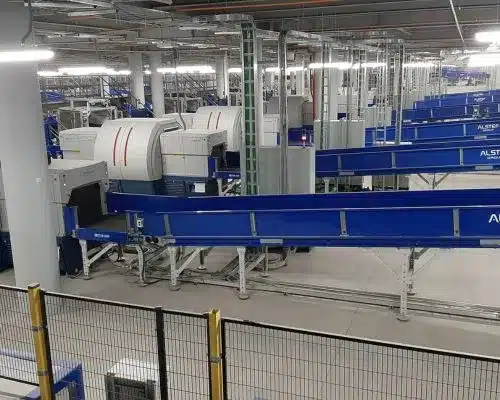
In today’s airport environment, baggage handling systems are under more pressure than ever. Passenger volumes fluctuate, peak periods intensify, and expectations for reliability continue to rise.
While every airport has its own constraints and requirements, high-performing baggage systems tend to share a few core characteristics. It’s not just about speed or scale,it’s about how the system performs under real-world conditions.
Here are three fundamentals that consistently make the difference.
- Balance over speed
It’s easy to assume that faster systems deliver better performance. In reality, speed alone rarely solves bottlenecks.
High-performing systems are designed around flow balance, ensuring that each part of the process works in sync. From check-in to screening to sortation, the goal is to avoid congestion points rather than simply pushing bags through faster.
A well-balanced system reduces stress on equipment, improves reliability, and handles peak demand more effectively.
- Flexibility built in from the start
No two days at an airport are the same. Flight schedules shift, passenger volumes vary, and operational priorities change.
The most effective systems are designed with flexibility in mind from day one. This includes the ability to:
- Adapt to changing volumes
- Reroute bags dynamically
- Integrate future upgrades without major disruption
Rather than being fixed, high-performing systems evolve alongside the airport.
- Reliability where it matters most
Performance isn’t defined by how a system operates on a good day. It’s defined by how it performs under pressure.
High-performing baggage systems prioritise consistency and resilience, particularly during peak periods. This means minimising single points of failure, designing for maintainability, and ensuring visibility and control across the system.
Ultimately, reliability builds trust, both for operators and passengers.
Looking beyond the system
A high-performing baggage system is not just a collection of conveyors and sorters. It’s a carefully designed ecosystem that balances flow, adapts to change, and delivers consistent performance over time.
As airports continue to grow and evolve, these fundamentals remain constant. They form the foundation for systems that are ready for both today’s demands and tomorrow’s challenges.